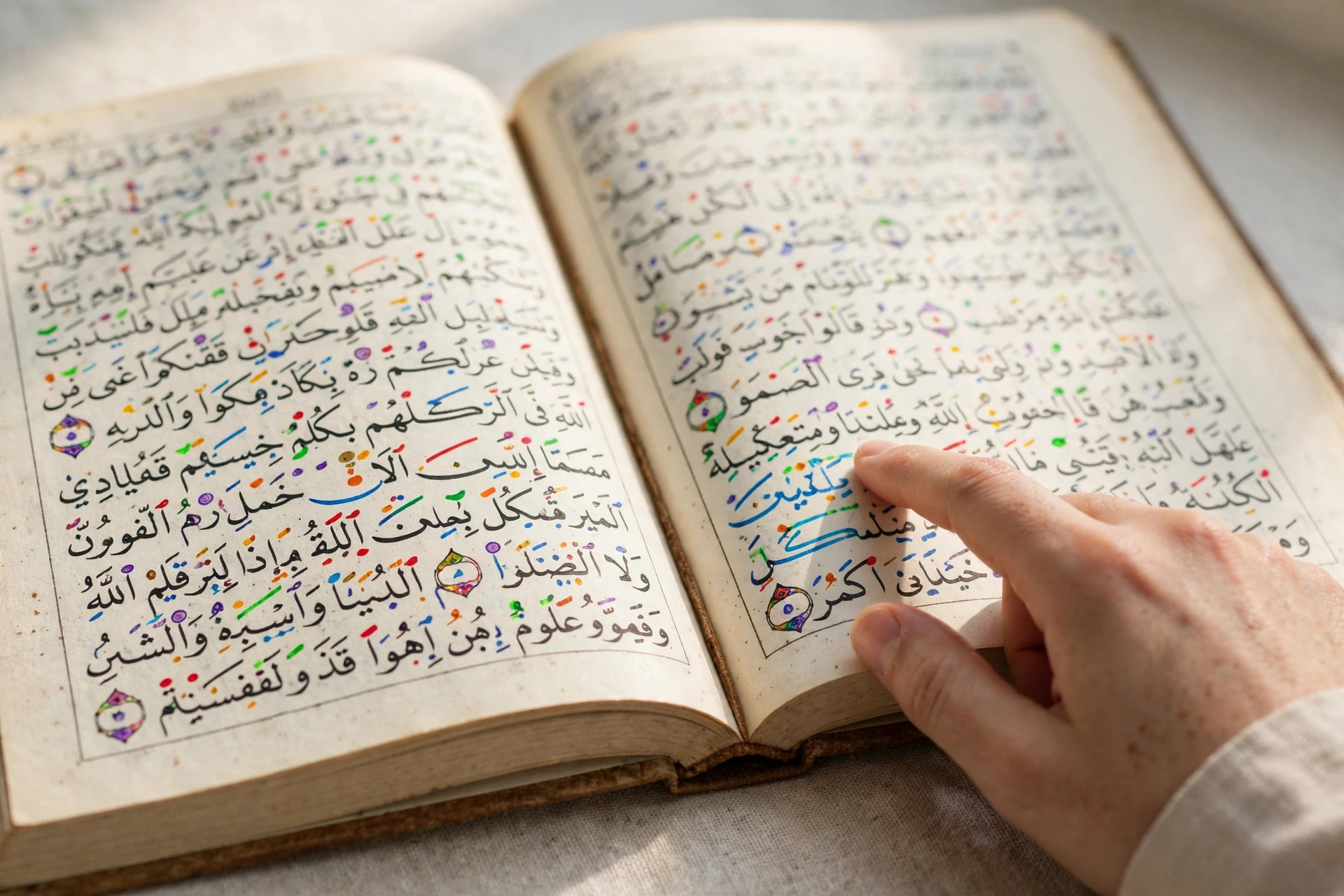
Tajweed vs Tarteel: The Short Answer
Tajweed is the rules of correct pronunciation, and tarteel is the slow, thoughtful style of reciting. Think of it this way: tajweed tells you how to say each letter correctly, while tarteel tells you to say it slowly and with reflection. You need tajweed for correctness and tarteel for beauty, and the best recitation combines both.
A helpful analogy is singing. Tajweed is like hitting the right notes, and tarteel is like singing them slowly with feeling. A reciter with tajweed but no tarteel sounds correct but rushed. A reciter with tarteel but no tajweed sounds calm but makes pronunciation mistakes. You want both.
Students in Quran Recitation with Tajweed learn the rules first, then practice applying them at a calm, measured pace. That combination, correct sounds delivered slowly and thoughtfully, is exactly what tarteel means.
What Is Tajweed?
Tajweed literally means to make better or to beautify. It is the science of pronouncing every Arabic letter from its correct point in the mouth or throat and giving it its rights. The rules cover things like Noon Sakinah, Madd, Qalqalah, and stopping signs. Tajweed keeps your recitation correct and protects the meanings of the words.
Tajweed was passed down through generations of reciters, teacher to student, all the way back to the Prophet Muhammad, peace be upon him. This unbroken chain is why learning tajweed from a qualified teacher matters so much. You are joining a chain of careful recitation that is over fourteen centuries old.
The rules might sound technical, but they are practical. They answer simple questions: how long do I stretch this vowel, do I merge these two letters, where do I pause? Once learned, they become automatic, and your recitation flows correctly without you thinking about every rule. Our Tajweed Mastery course takes students through every rule in depth.
What Is Tarteel?
Tarteel means reciting slowly, clearly, and with reflection. It comes from the Arabic root meaning to arrange in order, like pearls on a string. In tarteel, you give every word its full weight, pause at meaningful places, and let the meanings sink into your heart. It is the opposite of rushing through pages.
The Quran itself commands tarteel. In Surah Al-Muzzammil, Allah says to recite the Quran with measured recitation. This shows that how we recite matters to Allah, not just that we recite. Slow recitation lets you think about the verses, feel their weight, and connect with them.
Tarteel is also easier on the listener. When you recite slowly and clearly, everyone, from children to elders, can follow and benefit. This is why taraweeh reciters and teachers are praised for beautiful tarteel. It turns recitation from a task into an experience.
Tajweed vs Tarteel: 5 Key Differences
First, tajweed is the rules, tarteel is the style. Second, tajweed covers pronunciation, tarteel covers pace and reflection. Third, tajweed is fixed while tarteel is flexible. Fourth, tajweed is learned by correction, tarteel by practice and listening. Fifth, tajweed protects meaning, tarteel touches the heart.
Here is a simple way to remember the difference. If someone asks, did you pronounce that letter correctly, that is a tajweed question. If someone asks, did you recite it slowly and beautifully, that is a tarteel question. Both questions matter, but they check different things.
In class, your tutor works on both at once. First, they fix your pronunciation, which is tajweed. Then they ask you to slow down, pause at the right places, and recite with presence, which is tarteel. Students from the USA to the UK practice this combination in every lesson.
Why You Need Both for Beautiful Recitation
You need tajweed so your recitation is correct, and you need tarteel so your recitation is beautiful and heartfelt. Correct but rushed recitation misses the spirit of the Quran, while slow but incorrect recitation changes meanings. Together, they produce the recitation the Quran deserves: every letter right, every verse felt, and every listener moved.
Think of the two as body and soul. Tajweed is the body: the correct form, the precise sounds, the protected meanings. Tarteel is the soul: the calm pace, the reflection, the connection. A recitation with both is complete. A recitation missing either one feels incomplete, even if you cannot name why.
This is why serious students study both, not one or the other. The path is natural: learn the rules, then slow down and beautify. With months of guided practice, correct and beautiful recitation becomes your habit, not your effort.
Common Confusions About Tajweed and Tarteel
A common confusion is thinking tarteel just means reciting slowly, but true tarteel also includes clear pronunciation and reflection on meaning. Another confusion is believing tajweed is only for advanced students, when in fact beginners need basic tajweed from day one. A third confusion is mixing up tarteel with singing the Quran, but tarteel is measured and dignified, never showmanship.
Clearing up these confusions helps you learn faster. Tarteel without correct pronunciation is just slow mistakes, so tajweed comes first. And tajweed is not advanced theory reserved for scholars. Every beginner learning the alphabet is already learning the foundations of tajweed.
The dignified nature of tarteel matters too. Beautiful recitation moves hearts through clarity and sincerity, not through showing off. The best reciters sound humble, and their tarteel draws you into the words themselves.
How to Learn Tajweed and Tarteel Together
Learn them together by studying one tajweed rule at a time and then practicing it at a slow, reflective pace. In each session, your tutor introduces a rule, demonstrates it, has you copy it, and then asks you to recite verses slowly applying both the rule and calm pacing. This combined practice builds correct and beautiful recitation naturally, every week.
The method is simple and it works. Rule first, then slow practice. For example, after learning the Madd rules, you recite verses containing Madd slowly, counting the beats and letting the stretched sounds ring. You are training tajweed and tarteel in the same breath.
Start with a tutor who teaches both from the beginning. Book Free Trial today, and experience a class where every verse you recite is corrected for tajweed and guided toward beautiful tarteel.
Pricing Plans
All prices in USD per month.
| Plan | Price / month |
|---|---|
| 1 class / week | $35 |
| 2 classes / week | $48 |
| 3 classes / week | $65 |
| 4 classes / week | $82 |
| 5 classes / week | $99 |
| Hifz intensive (20 x 60-min classes) | $175 |
30-min 1-on-1 live classes, billed monthly. Free 3-day trial, no credit card. 10% sibling discount.
Frequently Asked Questions
Is tarteel a part of tajweed?
Which should I learn first, tajweed or tarteel?
What is the difference between tartil and tarteel?
Can you recite fast and still follow tajweed?
What does the Quran say about tarteel?
Do I need a teacher to learn tajweed and tarteel?
Start Your Free 3-Day Trial Today
No credit card required. Learn with certified 1-on-1 tutors from home.